A sprinkler system in Glendale is not just a convenience feature. It is a water management decision, a landscape design decision, and, for many homeowners, a long-term curb appeal decision. The climate is hot and dry, outdoor watering is restricted, and the difference between a thoughtful irrigation plan and a generic one can show up quickly in the water bill, the health of the plants, and the look of the property.
Glendale Water & Power remains in Phase III of its Mandatory Water Conservation Ordinance, which limits outdoor watering to two days a week, Tuesday and Saturday, for no more than 10 minutes per watering station. That single rule changes the way sprinkler installation should be approached. A system that might work in a milder climate, or in a city without strict watering windows, can perform poorly here if it is not planned around short, efficient applications of water.
The goal is not simply to “put in sprinklers.” The goal is to deliver the right amount of water to the right places, with as little waste as possible, while supporting the type of landscape that belongs in Glendale. That may mean traditional spray heads in a small lawn area, drip irrigation for native plants, separate irrigation zones for slopes or parkways, or a complete shift toward drought tolerant landscaping with only limited sprinkler use. The best systems begin with a clear plan before any trenching starts.
Glendale’s watering rules should shape the design from day one
Many sprinkler problems start because the system is designed as if water were unlimited. Heads are spaced for broad coverage, lawn and shrubs are placed on the same valve, and the controller is programmed as an afterthought. In Glendale, that approach can lead to dry spots, runoff, stressed plants, and unnecessary water use.
The city’s two-day watering schedule, with a 10-minute limit per station, makes irrigation efficiency more important than raw output. If a station applies water too quickly, the soil may not absorb it before it runs onto the sidewalk or driveway. If a station applies water too unevenly, one area may be soaked while another stays dry. If plants with very different water needs share a station, the system will overwater some plants just to keep others alive.

A good landscape contractor in Glendale should look at the watering restrictions before recommending equipment. The same property may need different irrigation methods in different areas. A small front yard lawn, a planted parkway, a slope with native plants, and a backyard entertaining area all behave differently. Treating them as one uniform landscape is where waste begins.
The 10-minute limit also makes precipitation rate important. Some spray nozzles apply water faster than Glendale soils can take it in, particularly on compacted areas or slight grades. In those cases, rotating nozzles or drip irrigation may perform better because they apply water more slowly and evenly. The point is not that one product solves every problem. It is that sprinkler installation should match the soil, exposure, plant palette, and local rules.
Start with the landscape, not the sprinkler heads
The most efficient irrigation systems are designed after the landscape plan is clear. Too often, homeowners ask for sprinkler installation first, then make planting decisions later. That sequence can lock a yard into inefficient zones. A better process starts with landscape design, then builds irrigation around the final layout.
In Glendale, this matters because the city actively promotes drought tolerant and California-friendly landscaping. It also maintains a drought-tolerant demonstration garden and highlights water-wise landscapes with many examples of California native plantings. Those public examples point to a practical idea: irrigation should support a climate-appropriate landscape rather than fight against local conditions.
A front yard landscaping plan for a Spanish Colonial Revival home, for instance, may look better with structured planting, decomposed granite, native or California-friendly shrubs, and a limited amount of low-water groundcover than with a large thirsty lawn. A Craftsman-style property might call for layered planting, shade-compatible species where appropriate, and a softer garden edge. In neighborhoods with strong architectural character, such as areas known for Spanish Colonial Revival, Tudor Revival, French-inspired, and Craftsman homes, the landscape should complement the building rather than appear pasted on.
That design connection is not just aesthetic. Glendale’s own design guidance asks whether landscape design complements the building and conserves water. Those two goals can work together. A thoughtful custom landscape design can frame a historic or character-rich home, reduce irrigation demand, and improve curb appeal at the same time.
For backyard landscaping, the priorities may shift. Homeowners often want outdoor living spaces, a paver patio, a dining area, artificial turf for play, planting for privacy, or a combination of hardscaping and garden beds. Irrigation should follow those uses. A patio installation may reduce irrigated square footage, but planted edges still need water. Retaining walls may create planting pockets with different drainage patterns. Synthetic grass may not need irrigation for growth, but it is not the same as a drought tolerant planting area in every program or planning context. In Glendale’s Turf Replacement Program, synthetic turf is not an approved conversion option, which matters if rebate eligibility is part of the project strategy.
Lawn, native planting, or something in between
The biggest water decision in many residential landscaping projects is whether to keep turf. Lawns can be functional, especially for children, pets, and certain front yard traditions. But in Glendale, a green lawn in summer can require far more water than a native plant landscape. The city has stated that native plants can survive drought with about 20 gallons of water per month, compared with up to 4,000 gallons per month for a green lawn in summer. That contrast is too large to ignore.
This does not mean every homeowner must remove every square foot of lawn. It does mean lawn should earn its place. If turf is used regularly and sized appropriately, efficient sprinklers may be justified. If it exists mainly as a default groundcover, replacing it with drought tolerant landscaping can reduce water demand dramatically.
Glendale’s Turf Replacement Program offers a $3 per square foot rebate for replacing turf with drought-tolerant or native plants, drip or efficient irrigation, and rainwater capture. That program encourages a different kind of landscape installation, one where irrigation is paired with plant choice, soil coverage, and water capture. For homeowners considering landscape renovation, the rebate can make it easier to move from a conventional lawn-heavy yard to a low maintenance landscaping plan.
The middle ground can work well. A small, purposeful turf area in the backyard may be surrounded by native plants on drip irrigation. A front yard may eliminate turf entirely but keep a crisp, designed look with hardscape borders, mulch, and structured planting. A narrow side yard may be converted to gravel, stepping stones, and drip-irrigated shrubs. The irrigation system should be designed to serve these different areas separately.
Why hydrozones are the backbone of efficient sprinkler installation
A hydrozone is a section of the landscape grouped by similar water needs. In practical terms, it means lawn with lawn, native shrubs with native shrubs, sunny areas separate from shaded areas, and slopes handled differently from flat ground. This is one of the most important concepts in water efficient landscaping.
If a landscaper Glendale CA homeowners hire connects turf, lavender, native sage, and a citrus tree to the same valve, the controller has no way to satisfy all of them properly. The turf may need frequent shallow watering during warm periods. The native or drought tolerant plants may prefer deeper, less frequent watering once established. The tree may need water delivered slowly near the root zone. One valve cannot make those distinctions.
Hydrozoning also helps with the city’s watering limits. Since each station is limited to 10 minutes, stations should be meaningful and efficient. A station should not waste half its runtime spraying pavement, oversaturating a shady bed, or trying to cover both lawn and shrubs. Every minute matters.
A common retrofit issue in older sprinkler systems is mixed heads on the same zone. Spray heads, rotors, and dripline all apply water at different rates. When they run together, at least one area is usually wrong. During a landscape renovation, it is worth correcting this even if the existing system “still works.” Functioning is not the same as efficient.
Choosing between sprinklers and drip irrigation
Sprinklers still have a place, especially for turf and certain groundcovers. But drip irrigation often makes more sense for drought tolerant landscaping, native plants, hedges, and planting beds. Glendale’s water-saving guidance emphasizes drip irrigation, mulch, leak repairs, early or late watering, and California-friendly plants. That combination reflects how efficient landscapes actually perform.
Sprinklers distribute water through the air, which can be useful for uniform turf coverage but vulnerable to wind drift and overspray. Drip irrigation delivers water closer to the soil, which reduces waste and keeps foliage drier. For shrub beds and native plantings, drip often provides better control.
There are trade-offs. Drip systems need proper filtration, pressure regulation, and periodic inspection. Emitters can clog. Tubing can be damaged by digging, animals, or maintenance work. Sprinkler heads are easier to see, but they can be knocked out of alignment, blocked by plant growth, or broken by foot traffic and lawn equipment. Neither system is maintenance-free.
For a Glendale residential landscaping project, the best answer is often a hybrid. Turf receives high-efficiency sprinkler nozzles on its own zone. Planting beds receive drip. Trees may have dedicated bubblers or drip rings, depending on the design. Parkway planting may need special attention because city rules apply when living or non-living plant materials over 12 inches high are installed in parkways, and parkway landscaping is governed by local municipal code. That is not a place to improvise without checking requirements.
A practical planning checklist before installation
Before trenching begins, a homeowner and contractor should agree on the fundamentals. A short planning meeting can prevent years of irritation, especially on properties with mixed planting, slopes, or future hardscape plans.
Confirm the current watering rules and design every irrigation zone around the allowed watering days and station runtime. Decide which areas truly need sprinklers, which areas should use drip, and which areas can be redesigned to need little or no irrigation. Group plants by water need, sun exposure, slope, and soil behavior so each valve serves a logical hydrozone. Account for future work such as a paver patio, retaining walls, outdoor living spaces, artificial turf, or sod installation before pipe locations are finalized. Review parkway plans, rebate goals, and any permit considerations before ordering materials or removing turf.That checklist is simple, but it forces the right conversation. It also reveals whether the project is only sprinkler installation or a broader landscape installation. In Glendale, the most successful projects often combine irrigation improvements with smarter planting and better hardscape layout.
Pressure, coverage, and runoff are where details matter
Efficient irrigation depends on details most homeowners never see until something goes wrong. Water pressure, head spacing, nozzle selection, valve layout, and controller programming all influence performance. A system can use good products and still waste water if these pieces are mismatched.
Pressure that is too high can mist water into the air, especially with spray heads. Pressure that is too low can prevent heads from reaching full coverage. Poor head spacing creates dry patches that tempt homeowners to increase runtime, which then overwater the rest of the zone. Heads placed too close to paving can overspray sidewalks, patios, and driveways. On a paver patio, repeated overspray can leave staining or mineral marks. Near retaining walls, excess water can create drainage concerns if the wall and backfill were not designed for it.
Runoff is especially important under a 10-minute station limit. If water starts running off after five minutes, running the station for the full allowed time does not help the plants. It just moves water into the gutter. In some landscapes, the solution is lower precipitation nozzles. In others, it is drip irrigation, soil improvement, mulch, or changing the plant palette. A skilled hardscape contractor or landscape contractor Glendale homeowners trust should consider how grading and hardscaping affect irrigation, not treat them as separate trades.
Mulch deserves special mention. Glendale’s guidance emphasizes mulch because it reduces evaporation and moderates soil temperature. In planting beds, mulch can make drip irrigation more effective by helping the soil retain moisture between watering days. It also gives drought tolerant and native plants a better chance during establishment.
Smart controllers are useful, but they are not a substitute for design
Modern irrigation controllers can help manage schedules, and many homeowners like the convenience. But a controller cannot fix poor zoning, overspray, broken heads, or inappropriate planting. It can only operate the system it is given.
In Glendale, the controller must still respect watering restrictions. The schedule should be built around Tuesday and Saturday outdoor watering, with no more than 10 minutes per watering station under the current Phase III rules. Early or late watering is preferable because evaporation is lower than during the heat of the day. If the landscapers Glendale CA controller has seasonal adjustment features, they should be used carefully and within local limits.
The most important controller setting is often not complicated. Each station should have a clear purpose. Lawn zones should not be tied to shrub zones. Drip zones should not be programmed as if they were spray zones. Recently planted areas may need establishment attention, but the long-term goal should be water discipline, not permanent overwatering.
I have seen homeowners replace controllers three times when the real problem was a leaking valve or mismatched nozzles. The newest timer did not solve the brown patch because the heads were spaced poorly. It did not solve the wet sidewalk because two nozzles were aimed wrong. Good equipment helps, but irrigation remains a physical system in a real yard.
Designing for drought tolerant landscaping and native plants
Drought tolerant landscaping is sometimes misunderstood as a sparse yard with a few rocks and struggling plants. Good xeriscaping is more intentional than that. It uses plant selection, spacing, soil coverage, grading, and irrigation design to create a landscape that looks composed while using less water.
Native plants can be especially effective in Glendale because they are suited to the broader climate pattern and can survive drought with far less water than a summer lawn once established. But native does not mean “plant it and ignore it.” Young plants need establishment water. Some natives dislike constant moisture. Others need enough spacing and airflow. The irrigation plan should be gentle, targeted, and adjustable as the plants mature.
A low maintenance landscaping design usually takes patience upfront. Plants may look modest at installation because they are spaced for mature size. That can be difficult for homeowners who want an instant full look. Overplanting creates problems later, including crowded irrigation, pruning demands, and competition for water. A better approach is to use mulch, boulders, pathways, and hardscape structure to make the landscape look finished while plants grow in.
For front yard landscaping, this is where custom landscape design matters. A drought tolerant yard can still feel formal, lush, Mediterranean, rustic, or contemporary. The irrigation system should disappear into that design, quietly supporting the plants without drawing attention.
Turf replacement and rebate planning
For homeowners removing lawn, Glendale’s Turf Replacement Program can influence the design. The rebate offers $3 per square foot for replacing turf with drought-tolerant or native plants, drip or efficient irrigation, and rainwater capture. Synthetic turf is not an approved conversion option in that program, which is an important distinction for anyone comparing artificial turf, planting, and rebate eligibility.
Artificial turf and synthetic grass can still be part of some residential landscaping conversations, especially in backyard areas where homeowners want a consistent play surface without mowing. But it should not be confused with a rebate-approved turf conversion under Glendale’s program. If the rebate matters, the design needs to align with the program’s requirements from the beginning.
Rainwater capture also deserves more attention than it gets. Even modest grading changes can help direct water toward planting areas rather than away from them. Hardscaping can either shed water wastefully or support the planting plan. A paver patio, for example, should be designed with drainage in mind so Hardscaping glendale water does not collect where it causes staining, settlement, or plant stress. The best landscape renovation projects treat irrigation, drainage, planting, and hardscape as one system.
Sprinkler installation for lawns that remain
Some Glendale homeowners will keep a lawn, and that can be reasonable when the lawn has a real use. In those cases, efficient sprinkler installation is critical. Turf requires even coverage because brown spots often lead to longer runtimes. Longer runtimes then overwater the areas that were already receiving enough.
The first step is sizing the lawn realistically. A smaller lawn with good coverage is better than a large lawn that struggles under watering limits. The shape also matters. Narrow strips are notoriously difficult to irrigate without overspray. Odd corners and curves can require more heads and careful nozzle selection. If a lawn area is too narrow, it may be better converted to planting, hardscape, or another low-water surface.
Sod installation should be planned carefully because new sod needs establishment water. In Glendale, any project involving new turf should be considered in light of current restrictions and long-term water use. A homeowner should not install sod just because the yard has always had grass. The lawn should serve a purpose and be supported by an irrigation system designed for efficiency.
Sprinkler heads should be placed for head-to-head coverage, meaning each head reaches the neighboring heads rather than merely spraying toward the middle. This often looks like more heads than a homeowner expects, but it can reduce dry professional landscapers Glendale CA spots and waste. Fewer heads placed too far apart usually create uneven watering, which is inefficient even if the installation cost is slightly lower.
Hardscaping changes irrigation needs
Hardscaping can reduce irrigated square footage, but it also changes how water moves through the property. A new paver patio, walkway, retaining wall, or outdoor living space can interrupt existing irrigation lines, alter drainage, and create new planting edges. That is why irrigation planning should happen before hardscape construction, not after the patio is finished.
A hardscape contractor who understands irrigation will sleeve under patios and walkways where future lines may be needed. Without sleeves, later repairs or changes may require lifting pavers or cutting through finished surfaces. That is avoidable with planning.
Retaining walls deserve special care. Planting above or behind walls needs irrigation, but excess water behind a wall can be a problem if drainage is not handled correctly. The planting plan, irrigation method, and wall drainage should be coordinated. Drip irrigation is often preferable near walls because it delivers water slowly and can be controlled more precisely than spray heads.
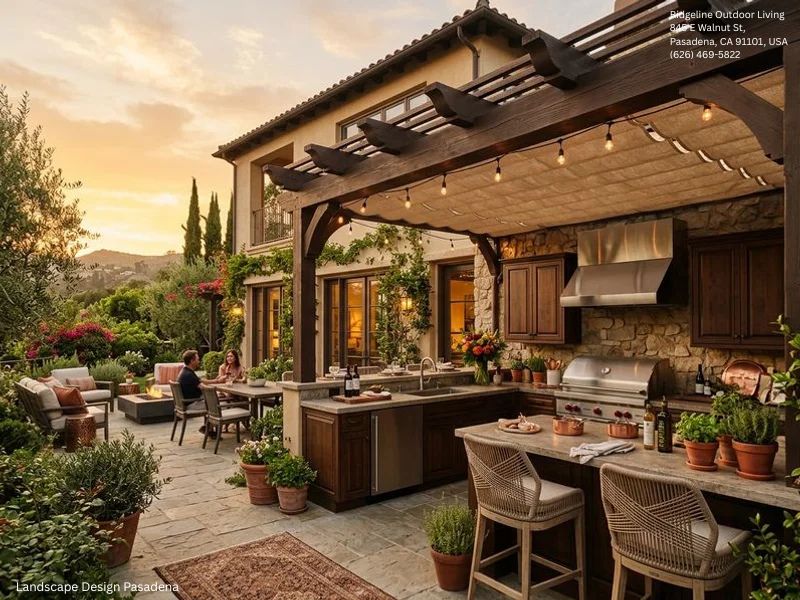
Outdoor living spaces also affect maintenance. Overspray onto seating areas, outdoor kitchens, or patios becomes annoying quickly. It can leave surfaces wet when homeowners want to use them and may create cleaning issues over time. Irrigation should support the landscape without intruding on the living space.
Maintenance is part of water efficiency
Even the best irrigation systems drift out of tune. Sprinkler heads settle, nozzles clog, drip tubing shifts, valves age, and plants grow over spray patterns. A system that was efficient at installation may waste water two years later if nobody checks it.
Glendale’s water-saving guidance Landscape community guide includes leak repairs for good reason. Small leaks can waste surprising amounts of water, and they are not always obvious. A soggy patch, an unusually green strip, low pressure on one zone, or a valve box that stays wet can indicate a problem. Drip leaks may hide under mulch until plants decline or water use rises.
Maintenance should also reflect Glendale’s gas-powered leaf blower prohibition. Landscapes designed with mulch, native plants, and low-water beds should be maintained in a way that does not damage drip lines or strip away soil coverage. Electric blowers, hand tools, and careful cleanup practices are better suited to water-wise planting beds. The city offers rebates for electric leaf blowers, which reinforces the broader shift toward quieter, cleaner landscape maintenance.
A seasonal irrigation review is usually enough for many residential properties. The system should be checked before the hottest months, after any hardscape or planting changes, and whenever water use seems unusual. For low maintenance landscaping, “low maintenance” does not mean no inspection. It means fewer recurring problems because the design fits the climate and the system is easy to manage.
Common mistakes that cost water
The most expensive irrigation mistakes are not always dramatic. They are ordinary decisions repeated across the yard: one valve serving too many plant types, spray heads aimed at pavement, turf in narrow strips, drip zones without pressure regulation, and controllers programmed without regard for local rules.
Here are the mistakes most worth avoiding:
Mixing lawn sprinklers and shrub drip on the same valve, which makes proper scheduling almost impossible. Installing turf in narrow or irregular areas where overspray and dry spots are likely. Ignoring mulch, then compensating for dry soil with longer watering. Designing hardscaping first and forcing irrigation to work around finished patios, walls, and walkways. Assuming synthetic grass qualifies for every turf replacement goal, even though Glendale’s turf replacement rebate does not approve it as a conversion option.Each of these problems can be corrected, but correction costs more after installation. The planning stage is where water savings are easiest to capture.
What a well-planned Glendale system looks like
A well-planned sprinkler installation in Glendale does not call attention to itself. The lawn, if present, has even coverage and no obvious overspray. Planting beds use drip irrigation under mulch. Native and drought tolerant plants are grouped by water need. The controller follows the city’s allowed watering days and station limits. Hardscaping and irrigation do not fight each other. Parkway planting, if included, is handled with awareness of city requirements.
The landscape itself also feels connected to the home. In a city with valuable housing and strong architectural character, curb appeal matters. Glendale’s median value of owner-occupied housing units is over $1 million, and outdoor improvements should respect that level of investment. A front yard does not need to be water-hungry to look refined. A backyard does not need a large lawn to be useful. Outdoor living spaces, paver patios, retaining walls, drought tolerant planting, and efficient irrigation systems can work together when the plan is coherent.
The right landscaper Glendale CA homeowners choose should be able to talk about more than pipe and heads. They should understand landscape design, plant water needs, hardscaping, rebate-sensitive choices, and the practical impact of Glendale’s watering rules. Sprinkler installation is one piece of a larger system. When that system is planned well, the yard uses less water, looks better through dry weather, and requires fewer frustrating adjustments later.
Efficient water use in Glendale is not achieved by a single product. It comes from judgment: where to keep turf, where to remove it, where to use drip, where hardscape can reduce demand, how to group plants, and how to schedule irrigation within local limits. That is the difference between a sprinkler system that merely turns on and one that truly belongs in a Glendale landscape.